Unveiling the Cleaning Robotics Market: Size Trends and Key Chinese Players Driving Growth

The cleaning robotics market has seen rapid expansion in recent years, transforming how households and businesses maintain cleanliness. This growth is not just about convenience; it reflects broader shifts in technology adoption, consumer behavior, and manufacturing capabilities. Notably, Chinese companies dominate the market, holding the top five positions globally. This post explores the market size, emerging trends, and the reasons behind China’s leadership in cleaning robotics.

Market Size and Growth Trends
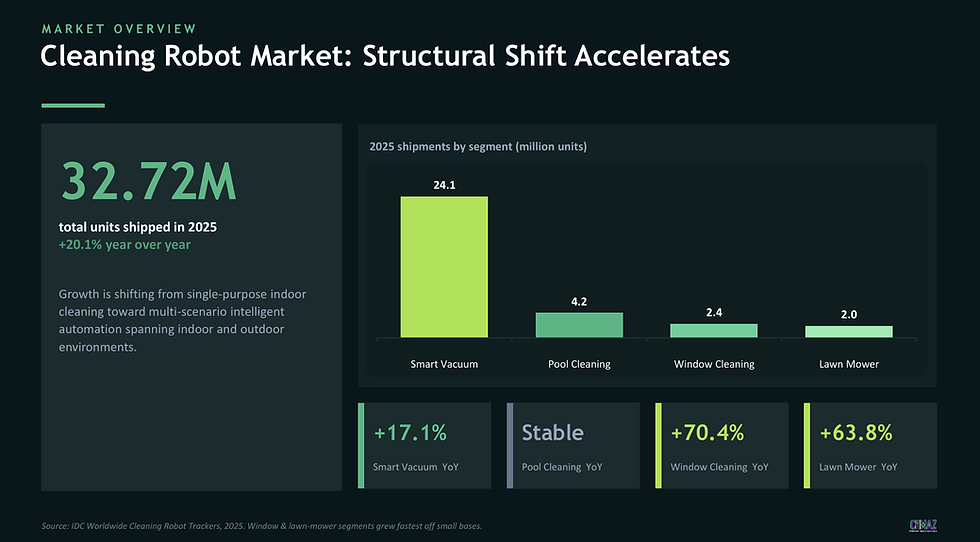
The global cleaning robotics market has expanded significantly, with a compound annual growth rate (CAGR) estimated around 20% over the past five years. In 2025, the market total shipped units hit approximately 33 million, driven by increasing demand for automated cleaning solutions in both residential and commercial sectors.
Several factors contribute to this growth:
Rising urbanization: More people live in apartments and smaller homes where robotic cleaners offer space-saving convenience.
Technological advances: Improvements in sensors, AI, and battery life have made robots more efficient and affordable.
Changing lifestyles: Busy consumers seek time-saving devices that reduce manual chores.
Health and hygiene awareness: The pandemic increased interest in regular and thorough cleaning, boosting demand for automated solutions.
The residential segment accounts for the largest share, with robotic vacuum cleaners leading the category. Commercial applications, such as floor scrubbers in offices and malls, are growing steadily as well.
Why Chinese Companies Lead the Market

China’s dominance in cleaning robotics is clear: the top five global players are all Chinese companies. This leadership results from several key factors:
Strong manufacturing ecosystem: China has a well-established supply chain for electronics, sensors, and motors, enabling cost-effective mass production.
Government support: Policies encouraging innovation and robotics development have accelerated growth.
Large domestic market: With a huge population and rising middle class, Chinese companies can scale quickly and test products locally.
Focus on R&D: Leading firms invest heavily in research to improve navigation algorithms, suction power, and multi-functionality.
Competitive pricing: Chinese brands offer high-quality products at lower prices, making them attractive worldwide.
Examples of top players include Roborock, Ecovacs, Dreame, Xiaomi and Narwal. These companies have expanded internationally, often entering markets in Europe, North America, and Southeast Asia.

Key Trends Shaping the Future
Highlight Several trends that will shape the cleaning robotics market in the coming years:
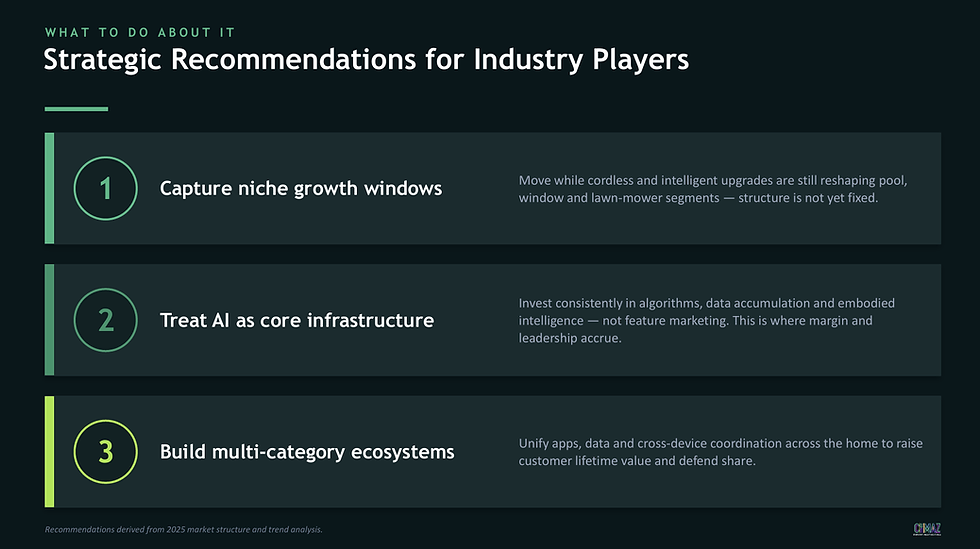
Integration with smart home systems: Robots increasingly connect with voice assistants and home automation platforms for seamless control.
Multi-function devices: New models combine vacuuming, mopping, and UV sterilization to meet diverse cleaning needs.
Improved AI and mapping: Advanced sensors and AI enable robots to create detailed maps of homes, avoid obstacles, and clean more efficiently.
Sustainability focus: Energy-efficient designs and recyclable materials are becoming priorities.
Subscription and service models: Some companies offer maintenance, consumables, and software updates through subscription plans.

These trends reflect consumer demand for smarter, more versatile, and environmentally friendly cleaning solutions.
Challenges and Opportunities
Despite strong growth, the market faces challenges:
Competition and differentiation: With many players, companies must innovate to stand out.
Consumer education: Some users remain skeptical about robot effectiveness compared to manual cleaning.
Battery life and maintenance: Longer battery life and easier upkeep are ongoing needs.
Regulatory compliance: Exporting to different countries requires meeting various safety and quality standards.
Opportunities lie in expanding into emerging markets, developing specialized robots for commercial and industrial use, and enhancing AI capabilities.
Final Thoughts
The cleaning robotics market is expanding rapidly, driven by urban lifestyles, technological progress, and growing hygiene awareness. Chinese companies lead this space thanks to strong manufacturing, innovation, and competitive pricing. As robots become smarter and more versatile, their role in everyday cleaning will only grow.
For consumers and businesses, this means more efficient, time-saving cleaning options. For investors and industry watchers, the market offers exciting potential fueled by ongoing innovation and global demand.
Exploring the latest models and understanding the market dynamics can help you make informed choices about adopting cleaning robotics technology. Keep an eye on Chinese brands—they are setting the pace and shaping the future of automated cleaning.



Comments