Understanding China's Unique Cloud Market Dynamics and Key Players

China stands as the world's second-largest cloud market, rapidly expanding and evolving. Unlike other global markets dominated by multinational giants, China’s cloud ecosystem is almost entirely shaped by domestic providers. These companies operate under a distinct set of economic and regulatory conditions, creating a parallel cloud environment that requires a unique approach for anyone looking to engage with it. Understanding China’s cloud landscape is essential for businesses and investors aiming to position themselves effectively.
The Scale and Growth of China’s Cloud Market

China’s cloud market has grown at an impressive pace, fueled by strong domestic demand and government support for digital transformation. The market size is second only to the United States, with forecasts showing continued rapid growth. This expansion is driven by:
Increasing adoption of cloud services by enterprises across industries such as finance, manufacturing, and retail.
Government initiatives promoting cloud computing as part of broader digital economy strategies.
The rise of new technologies like artificial intelligence and big data analytics that rely heavily on cloud infrastructure.
Despite this growth, China’s cloud market remains largely insulated from foreign providers due to regulatory restrictions and data sovereignty laws. This has led to a market dominated by domestic players who build and operate their own infrastructure.
Why China’s Cloud Market Operates Differently
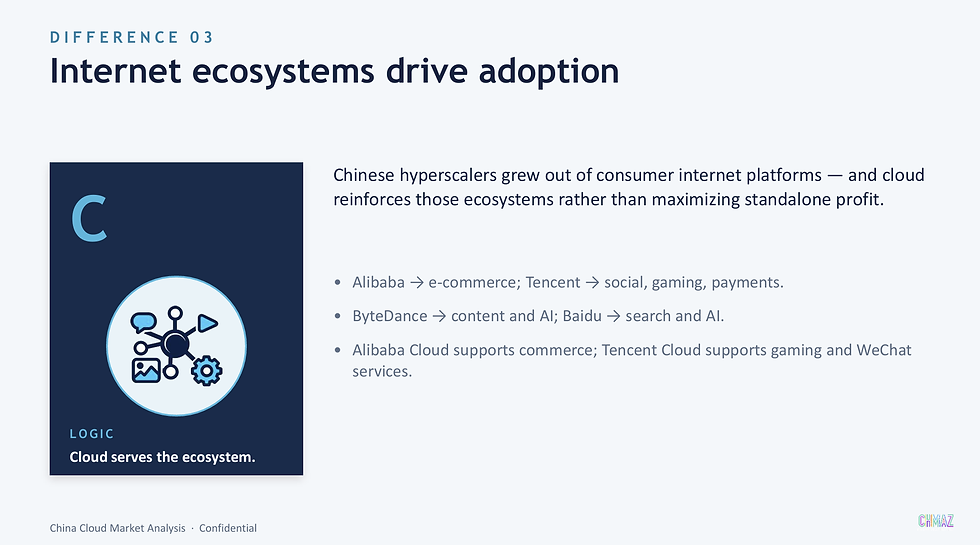
China’s cloud ecosystem is shaped by several unique factors:




Top Players in China’s Cloud Market
The leading cloud providers in China each have distinct strengths and challenges. Here’s an overview of the top players:

Alibaba Cloud
Alibaba Cloud is the largest cloud provider in China and a global player. It benefits from:
Extensive infrastructure across China and international regions.
Strong integration with Alibaba’s e-commerce and financial ecosystems.
Advanced AI and big data capabilities.
Challenges include intense competition domestically and regulatory scrutiny abroad.
Tencent Cloud
Tencent Cloud leverages Tencent’s massive user base from social media, gaming, and payments. Its advantages include:
Deep integration with Tencent’s consumer platforms.
Strong presence in gaming and entertainment sectors.
Rapid infrastructure expansion.
Tencent Cloud faces challenges in enterprise adoption compared to Alibaba.
Huawei Cloud
Huawei Cloud focuses on infrastructure and telecom expertise. Key strengths are:
Ownership of extensive hardware and network assets.
Strong government and enterprise relationships.
Emphasis on hybrid cloud and AI solutions.
Huawei faces international restrictions that limit its global cloud ambitions.


Key Takeaways for Positioning in China’s Cloud Market
Understand the regulatory landscape: Compliance with data localization and cybersecurity laws is non-negotiable.
Partner with local providers: Collaborations can provide market access and local expertise.
Focus on infrastructure ownership: Building or accessing owned infrastructure is crucial for performance and compliance.
Tailor offerings to local needs: Solutions must align with government priorities and industry demands.
Monitor market concentration: The dominance of a few players means competitive strategies must be well planned.
China’s cloud market is a distinct ecosystem shaped by its own rules and players. For businesses and investors, recognizing these differences is the first step toward meaningful engagement and growth.
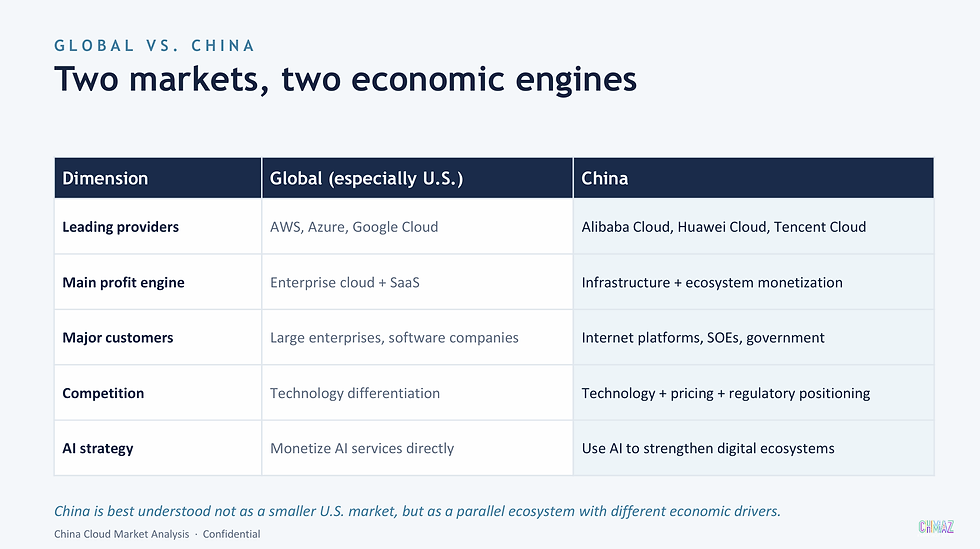
The cloud market will keep expanding globally, but China’s unique environment means it will continue to develop on its own path. Staying informed and adaptable will help stakeholders navigate this complex but promising landscape.


Comments